Quiz
Take our quiz to get helpful resources based directly on your needs.
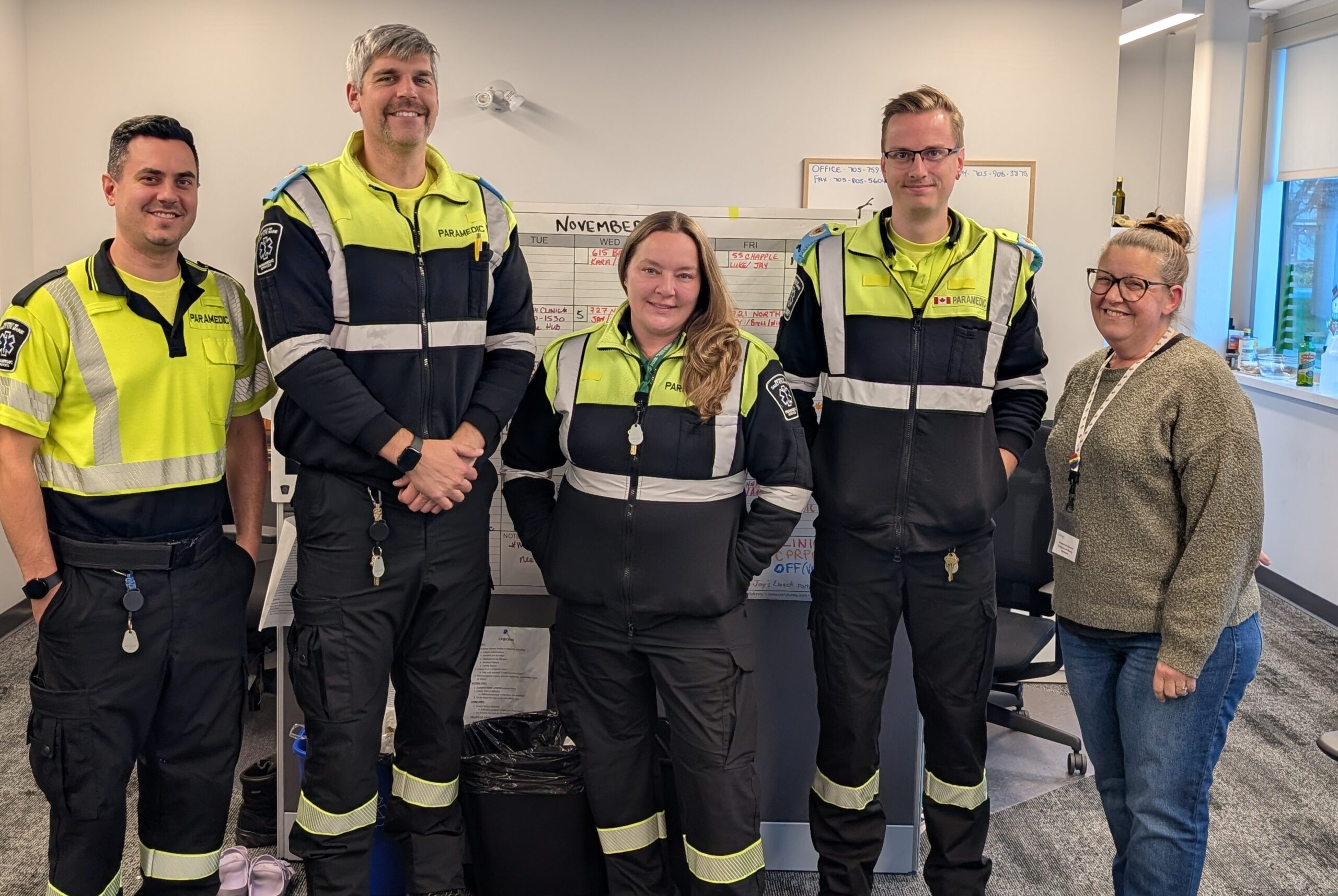
Community paramedicine programs are proven to reduce 911 calls, improve patient quality of life, and reduce chronic disease risk.
Sault Ste. Marie’s Community Paramedicine Program does just that, delivering non-emergency, in-home healthcare to the more than 70,000 residents in this rural northern
community.
Its focus: serving older adults with complex medical needs who may be at risk of hospitalization or are awaiting long term care—many of whom have caregivers living with them.
These caregivers, who provide up to 75% of patient care, also need support to keep them healthy, well, and able to continue providing critical care.
But staff are facing increased demands to provide more than medical care, and to support things like system navigation as well as unique complexities at home through emotional support.
This doesn’t just increase pressure on staff: these capacity issues can mean less opportunities to support caregivers and increase the risk of caregiver burnout. With data showing that improved caregiver health and wellbeing directly correlate with improved patient outcomes, this can also have consequences for quality of care.
“ By supporting the caregiver of our patients, we are supporting our patients. And that’s kind of the outlook that we have.”
Healthcare Provider
That’s where Caregiver Link Workers come in. Partnering with Sault Ste. Marie’s Community Paramedicine Program, Caregiver Link Workers from our Caregiver Social Prescribing Program join their staff for home visits: supporting the caregiver while the paramedicine team supports the patient—AKA tandem visits.
Through training and experience, Caregiver Link Workers understand the unique challenges caregivers face and can connect them to the right local, culturally appropriate, recreational, and social systems and services they need.
By ensuring that caregivers are meaningfully engaged with and supported, they strengthen the overall community-based supports and services offered by paramedicine programs.
Our program evaluation indicated that these tandem visits helped reduce provider burden:
“By addressing the broader needs of patients and caregivers through social connections and community resources, social prescribing can help alleviate some of the pressures on our team. This can reduce burnout and improve job satisfaction.”
Healthcare Provider

Many people are not aware of the options available to them when their health care needs or circumstances change, and it becomes difficult to manage on their own.
If you are caring for someone who may need home care—whether they need assistance getting back on track after a hospital stay, illness or injury, or if they have a complex or chronic health condition—learn more about the options available through Ontario Health atHome.
Ontario Health atHome supports individuals across the province with assessing patient care needs, coordinating in-home and community-based care, providing access and referrals to community services, and managing Ontario’s long-term care home placement process. They help patients, families, and caregivers when they need services, support, and guidance to:
Through the Ontario Health atHome intake and assessment process, you’ll find out if the services can be covered by OHIP.
Call 1‑833‑515‑1234 from anywhere in Ontario-seven (7) days a week, 365 days a year. If you are calling from outside Ontario, please contact Ontario Health atHome using the local contact information for the area where the person you support resides. You can find the appropriate toll‑free number by using the Postal Code lookup tool on the Ontario Health atHome website: https://ontariohealthathome.ca/find-my-local-office/
You can either call as a caregiver on behalf of someone else who needs support, or to access services for yourself.
Ontario residents with a valid Ontario Health Insurance Plan (OHIP) card are eligible to receive an assessment completed by a care coordinator to further determine eligibility and access a wide-range of home and community care supports. Depending on the services or supports that best fit individual patient needs, there are some additional eligibility requirements depending on the program, which Ontario Health atHome staff will discuss in detail with you.
For your call, be prepared with:
Involving those with lived experience brings unique insight, helps guide Ontario Health atHome in the development of patient-centred programs, services and policies, and further ensures Ontario Health atHome’s services are relevant, beneficial, reflective and supportive of patient needs, priorities and values.
Learn more about Community Engagement and how to become an advisor at Ontario Health atHome
Looking for more resources to support you as a caregiver? Access our mental health resources and other tools to support you in this role.

There’s no guidebook that teaches you how to be a caregiver. You may be trying to find answers and resources between medical appointments, prescription pick-ups, and providing hands-on care.
Connect is here to help. It’s a free monthly newsletter from the Ontario Caregiver Organization, available in English and French, built for the 4 million people in Ontario who care for a family member, partner, friend, or neighbour.
Each month, you can expect:
This newsletter is designed to support caregivers: family members, partners, friends, and neighbours who provide care when someone in their life needs them.
If you’re a caregiver, this monthly newsletter will help you on your caregiver journey.
If you’re looking to support a caregiver in your life, you can sign up and share OCO’s resources with them.
Yes we do!
If you’re a caregiver looking for more support, our 90Second Caregiver is a free, evidence-based weekly newsletter that shares health information, tips, and advice. Designed to be read in 90 seconds, because we know how busy you are.
If you’re a healthcare provider looking to include and support caregivers in your work, join our Essential Care Partner Learning Collaborative, an interactive forum for healthcare organizations with a focus on caregiver inclusion.
If you’re looking for past issues of the newsletter, you can find the most recent issues right here:
The stories shared in this report highlight what becomes possible when we work together. Discover the positive change that’s happening for caregivers across Ontario.
207,000
caregiver encounters,* demonstrating continued growth in demand for programs and services
4 in 5
caregivers felt better able to cope after accessing an OCO program
86%
of social prescribing participants reported improved mental well-being
8,038
caregivers registered for the SCALE Program
525
healthcare organizations connected with the Essential Care Partner Support Hub since 2023
8,230
healthcare providers reached through Essential Care Partner Support Hub education activities
* Encounters are defined as engagement, information, education, or support provided to a caregiver or professional intermediaries through a variety of activities, programs, and services.
This year, OCO connected with more caregivers than ever before through direct programs, community partnerships, and a growing network of healthcare organizations embedding caregiver-inclusive practices into their work.
OCO had a record number of caregiver encounters, with each providing an opportunity to reduce distress and change the trajectory of the individual caregiving experience.
Caregiver Impact
“The moment the first SCALE webinar began, it was like an arrow straight to the heart. I was in a room with caregivers from all walks of life and for the first time, I didn’t feel alone.”
— SCALE Together™ Participant
There’s been a noticeable shift. More healthcare organizations are recognizing caregivers as part of the care team. System partners are seeking OCO’s expertise and increasingly bringing caregivers to the table in meaningful ways. The seeds planted over years of purposeful effort are taking root.
The time is now to harness this momentum and make meaningful and lasting change for all caregivers across the province.
Why it matters
4.2M
caregivers in Ontario
69%
feel so burnt out they don’t know if they can keep going
6.5M
projected caregivers in Ontario by 2030
Every day, caregivers across Ontario show up for someone who needs them: a parent, a partner, a friend, a neighbour – providing physical and emotional support, often at significant cost to their own health, finances, and overall well-being.
Caregivers provide up to 90% of the care in the health system. They tell us they need it to be easier. They want a health system that recognizes them as part of the care team, and they need support for their own health and wellness. Supporting them is essential to health system transformation. That’s why we do what we do.
The work ahead is ambitious. Finding new ways to reach caregivers before they hit their breaking point is critical.
We will continue to grow programs like SCALE and SCALE Together™, Social Prescribing, and the Essential Care Partner Support Hub. As the number of caregivers in Ontario grows toward 6.5 million by 2030, we are continuing our work with caregivers and system leaders to drive change while bringing new programs and services to caregivers who need support
Seamless, integrated care. Improved transitions for patients, families, and caregivers.
To realize these goals, Ontario Health Teams (OHTs) are working with a new partner that’s always been there: caregivers.
Providing critical patient information, caregivers help reduce preventable adverse events, lower readmission rates, improve quality indicators like reduced falls and medication adherence, and play a critical role enabling patients to remain in their homes.
These benefits support patients, make OHTs more efficient, and reduce pressure on healthcare providers and our system. But caregivers are struggling. More than two-thirds feel so burnt out they aren’t sure how they will continue in their role.
To improve patient care, Couchiching OHT (COHT) knew they had to support caregivers first. Leveraging only their existing staff capacity, they embedded caregiver identification, inclusion, and support across all aspects of their work as a core enabler of person and family-centred care.

Now you don’t have to. Through SCALE Together ™ you get a structured, ready-to-run program proven to help caregivers cope with the emotional aspects of caregiving. Plus, it’s free.
Partner organizations get the resources they need to implement the program, including webinars, workbooks, evaluation tools, and ongoing support from OCO staff.
Are you a caregiver looking for support? You can access SCALE programming on demand or learn more about the program.
The program runs over eight weeks, covering topics like burnout, caregiver guilt, grief, stress, and boundary-setting. Each week, your organization will host a 90-minute in-person session, structured in three steps:
Stream OCO’s live or recorded psychoeducational webinar in your setting, in an accessible space.
After the webinar, a regulated health professional from your organization leads a 30-minute group debrief.
Following the sessions, you can refer caregivers to OCO’s free programs to support caregiver well-being.
Participate alongside OCO’s online SCALE program at the same date and time (October–November and February–March). Webinars are delivered “Live”.
Use pre-recorded webinars at a date and time chosen by your organization.
Please note: Counselling services associated with the SCALE program are available only during OCO’s SCALE program periods (October–November and February–March). Outside of these periods, participants can access OCO’s Peer Support and Caregiver Coaching programs.
Real impact from caregivers who participated in our SCALE program.
gained tools to manage their own wellbeing
reported a helpful shift in their caregiving outlook
felt more emotionally supported in their role
When you partner with OCO for SCALE Together™, you get a pre-built program designed to support caregiver mental health on-site. It’s ready-to-run, evidence-based, and free.
You provide:
We’ll help with the rest:
“This series has been invaluable, for myself and the group of caregivers recruited to join. I also find the Essential Care Partners Support Hub to be hugely helpful for resources to share with the broader team, and this has truly supported colleagues in caregiver identification, inclusion, and pointing them to supports.”
SCALE Together™ participating organization
Yes. A regulated health professional is required to facilitate the weekly debrief sessions. The content addresses sensitive emotional topics, and qualified facilitation ensures caregivers are supported appropriately
Contact our team to explore what options might be possible: partners@ontariocaregiver.ca
No. SCALE Together™ is free for partner organizations. The Ontario Caregiver Organization provides all program materials, co-branded promotional resources, and a dedicated contact to support you.
The only investment required from your organization is staff time to facilitate and promote the program and providing a space within your facility to run the program.
Note that you cannot charge participants/registrants/caregivers for accessing this program.
SCALE Together™ is an 8-week program. Sessions are approximately 90 minutes each: one hour for the psychoeducational webinar and 30 minutes for a facilitated group debrief.
SCALE Together™ is an in-person program. For organizations that prefer virtual delivery, OCO recommends promoting the original online SCALE program, which caregivers can join directly at no cost.
If you’re a caregiver looking for mental health support, our SCALE Program is available on demand with workbooks and webinars you can go through at your own pace. This is an online, self-directed option.
Note that we cannot provide referrals to settings that offer SCALE Together™, since they are run independently by partner organizations.
If you’re interested in bringing SCALE Together™ to your organization, reach out to us at partners@ontariocaregiver.ca.

If you’re feeling inspired, our team would love to connect. Partnering with us is straightforward and you’ll have support along the way from our first conversation to the program launch. There’s no cost and no curriculum to develop.
Get in touchDriving hours just to see a doctor. Grappling with mounting gas bills. Struggling to connect to critical online portals.
Caregivers from rural and remote communities are struggling. But healthcare providers like you can help.
Built on real-life feedback collected directly from caregivers, this 5-page toolkit has exactly what you need to support them.
Because when caregivers are supported, health outcomes improve, making the experience better for patients and your team.
Caregiving is challenging. For those who live in rural and remote communities, many of the every day obstacles of this role are magnified.
To find out more about the realities of caregiving in rural and remote communities, we brought together caregivers to hear about their experiences. This is what they had to say.
This work was made possible through funding from the Petro-Canada CareMakers Foundation. Special thanks to our caregiver partners for their insights and collaboration.
In 2025, OCO hosted surveys and in-person roundtables with caregivers in remote and rural communities, who opened up about the barriers they face as well as the practical strategies they use to navigate these challenges. This toolkit provides simple, practical strategies to strengthen caregiver well-being for better care experiences and outcomes.
Four million Ontarians are caring for a loved one and 69% say they’re not sure they can continue. They’re exhausted, and they need help.
Your gift to the Ontario Caregiver Organization connects caregivers with free, compassionate support.
Every caregiver deserves to know they’re not alone. Donate today.


Take our quiz to get helpful resources based directly on your needs.